Showing posts with label appalachia. Show all posts

Sunday, July 12, 2026

The High Sheriff -- a repost


When we first moved to the mountains, I was charmed with the many unusual and antique turns of speech I heard from our older neighbors. "High Sheriff' was one of these, immediately reminding me of Robin Hood's evil nemesis -- The High Sheriff of Nottingham.  
  
Some states actually have High Sheriffs (usually the head sheriff in the state) and in England it is a ceremonial position. But as far as I can tell, in North Carolina it's not an official title -- just one used by the older people. Maybe a survival from earlier days in England or Scotland? I don't know.  But it's still heard now and again.

The word "sheriff" itself is a contraction of the term "shire reeve" -- a position that predates the Norman Conquest (1066). ( Remember the Reeve in The Canterbury Tales?)  The shire reeve was charged  with keeping the peace  throughout a shire or county on behalf of the king.

The mission is much the same today -- keeping the peace.

 The picture below from the early Twenties is 'High Sheriff'  Jesse James Bailey -- shown here with a mountain of seized moonshine stills. The Madison County Courthouse is in the background.

Not so much moonshine these days -- meth and marijuana are the illicit substances that today's high sheriff has to worry about.
Posted by Picasa

Thursday, March 1, 2012

Long Time Gone

Leave it be, she said when Corley went to haul it off,
Thinking to spare his mama some pain.
Directly after the snow melted,  he'd brought his team around,
Hooked the big gray mules to the front bumper.
It ain't no trouble, Mama. I kin haul it down to Allen's-

Leave it be, she said, I told you, Leave it be. 
Over fifty years ago, that was, the March that big snow came.
She'd waded at sun up through the high-piled drifts
To find her man laying across the seat, 
An empty jar of white likker on the floor board,
And him, her man, frosted with rime ice.. 
Dead as a hammer. 
He always was bad to drink, or so the neighbors said,
But she pretended not to know and he wouldn't bring it in the house.
That last night, in all that snow, he'd stepped out to his car for a little sup,
Turned on the engine  to get the warmth of the heater . . .
Another sup, and another. . .
Inside the house, she blew out the last lamp.
And all the while the wind blew and the snow fell . . .

Smothered to death, is what the neighbors said,
Once snow covered up the tail pipe and the motor still running . . .
They shook their heads, whispering,
And her in the house, not but a few steps away. . .

She lived another twenty-some years, watching that car rust,
While the house fell to pieces around her.
Corley tried his best to keep the place up but she'd have none of it,
Leave it be,  she'd say. I told you, Leave it be.


This was inspired by an incident from Sheila Kay Adams's book Come Go Home With Me...  I'm not done with it -- it may need to be a short story.
Posted by Picasa

Friday, January 27, 2012

Ball Hooting in a Gaum


 This unseasonably warm and rainy weather that has flowers blooming too early has also made the ground muddy. John came in from getting fire wood and told me that the way into the pasture was a big gaum and he was afraid the Kubota ATV would go to ball hooting if he wasn't careful.

Before we moved here, I would have thought maybe he was speaking in tongues.  But I've learned the language.

A gaum (or gom) is a big mess -- in this case, a patch of mud, though it could apply to a teenager's room. And ball hooting means sliding around.  The term come from days of logging with horses -- pulling a big log down hill was dangerous for man and beast and you definitely didn't want that log to go to ball hooting.
  
Posted by Picasa

Thursday, January 5, 2012

Along the Branch

Panther Branch, Anderson Branch, Doe Branch, Long Branch, Dry Branch, Laurel Branch, Back Branch -- in my neck of the woods, lots of the roads are named for the branches ( or creeks) they  follow.
 

For years and years, all of us who lived along a particular branch -- even if it was miles long -- used that branch as our address. We were one of a number of families with the Anderson Branch address. But when 911 came to our county, there was a need for a bit more precision and all our various private roads and long driveways needed to be given names.

We chose Wool Branch, as that was what we had been told was the name of the little branch that flows down our mountain into Anderson Branch.  Lots of folks used their family names; some were, more creative. And very often, the choice of the name is a clue as to whether the family living on that private road is local or a transplant.

I wonder who lives on Lothlorien Lane (which I just discovered on Google is about seven miles away) native or 'new' person?
Posted by Picasa

Friday, February 11, 2011

The Old Corncrib - Repost

The corncrib was a relic of the days when the previous owner of the farm had grown field corn to feed his cattle, his mules, his chickens, and his family. The corn was harvested after drying on the stalk in the field, and the unshucked ears were stored in the small slat-sided building that was lined with rodent-proof woven wire to protect the precious golden bounty. Nowadays, the corn crib stood empty, but for a few ancient moldy cornshucks. (Art's Blood, p. 123)

This, of course, is the original of the corn crib where Elizabeth and Ben found the unhappy Kyra. It's functioning today as a tool shed and a carport for our little utility vehicle but in 1973, when we bought the upper part of the farm from Clifford and Louise, the corn crib brimmed with fat dry ears of white corn -- Hickory King, I think it was.

Corn was the staff of life on the small farm. Every so often Clifford would take a bag or two of the whole corn to a mill in Tennessee where it would be coarsely ground -- shucks, cobs, and all -- and mixed with cottonseed meal and molasses to make feed for the cows. Every day Louise would pull the shucks off a few ears and toss them to her chickens who would eagerly peck the cobs clean. Nell the mule was the daily recipient of more ears (but not too many, lest too much corn make her 'rank' (overly frisky and unmanageable.) The fattening pig, who lived mostly on buttermilk, foods scraps, and garden waste, would be fed ears of corn during the month or so prior to butchering to "harden up the flesh."

And this same corn, shucked and shelled would be taken, not to the big mill, but to a nearby little mill run by a belt attached to the rear wheel drum of a tractor. The owner of this improvised mill would take his pay in meal -- in a little measure specifically for the purpose. This fragrant meal, which was freshly ground in small batches twice a month, provided the best cornbread in the world. Eaten midday -- hot and steaming out of the wood stove, dripping with home-churned butter, it accompanied an array of vegetables, fresh or home-canned, depending on the season, and a very modest taste of some sort of meat. The leftover corn bread might go to the pigs or the hounds, or, dunked in chilled buttermilk left after the day's churning, provide a light supper.

"You keep the mule to plow the corn and you grow the corn to feed the mule," Clifford told us. Man, animals, and corn -- their existence was interwoven.


Thursday, October 28, 2010

Old Tobacco Barns (repost)

The old tobacco barns that dot the landscape in our county sometimes puzzle uninformed visitors who remember snug red New England barns or massive white-boarded Midwestern structures. The visitors laugh and shake their heads and go back home to tell their friends about the ignorant hillbillies of Appalachia -- too shiftless to make a barn that'll keep the weather out. Sometimes they assume that once there was chinking between the logs and the present generation hasn't bothered to repair it. But they're wrong on both counts.

These beautiful old silvery-gray buildings were meant to let the air in -- built specifically to air-cure burley tobacco, at one time the major crop in our county. Inside the barns, stout tier poles stretch from end to end, four or five or more tiers high. When the tobacco was harvested, the stalks of the whole tobacco plants would be impaled on tobacco sticks -- five plants per stick. Then these sticks would be hung from the tier poles, rank after rank of wilting yellow-green leaves till the barn was full. From September till November the leaves would cure in the mountain air, their tarnished chartreuse hue giving way eventually to a rich golden brown that said the leaves were ready to be stripped from the stalks, sorted and graded, and taken to market.

Proud old barns, built right for the job they did.
Posted by Picasa

Thursday, October 7, 2010

Not from Around here, Are You?

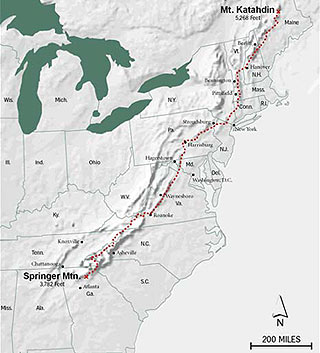
How do you pronounce it -- App-a-LAY-shun? Or App-a-LATCH-chun? It probably depends on where you're from. And since the Appalachian Mountains stretch from Georgia all the way to Maine, there's plenty of room for disagreement.


In Appalachia: A History, John Alexander Williams says this about the term Appalachia:

"As if the varying boundaries weren't enough, there is no fundamental agreement even about how to pronounce the word "Appalachia." Residents of southern and central Appalachia pronounce the term with a short -a- in the stressed third syllable; further north, the same -a- is given a long pronunciation, as in "Appal-achia." 

"Most of the experts and bureaucrats who came from Washington and elsewhere to fix the region's problems beginning in the 1960s adopted the northern pronunciation, while resident experts favor the southern-- which led to a situation, according to one commentator, wherein 'people who said AppaLAYchia were perceived as outsiders who didn't know what they were talking about but were more than willing to tell people from the mountains what to do and how they should do it.'

"Finally, while a majority of both long and short -a- users crunch the third syllable as though it were spelled Appal-atch-yuh, in New England-- where the term "Appalachian" first came into widespread use by nongeologists thanks to the Appalachian Mountain Club and the development of the Appalachian Trail-- a variant pronunciation uses "sh" rather than "ch," as in Appal-ay-shuh."
 In my county, a lot of folks pronounce the name of a nearby community Lee-cester. Across the county line, the folks who live there call it Lester. Both of them spell it Leicester.

Is the Greek gyro a yee-roe or a jie-roe? Is the space between your eyebrows and hairline your fore-head or your far-ed? You say to –may- to; I say to- mah- to . . .

Hit don’t matter, as my neighbor said about the spelling of her name, but the way you pronounce a word can tell others something about where you’re coming from. . .
Posted by Picasa

Saturday, March 6, 2010

Sepia Saturday -- Salt of the Earth


Kind of timeless, this first picture.  When do you think?  1901? 1925? 1933? 

Nope - 1974. The year  after we bought the upper part of the Freeman farm in the mountains of North Carolina.

It was the farm Louise Payne Freeman grew up on. And after many years of sharecropping, she and her husband Clifford bought it from the other heirs.

Clifford and Louise grew up in a time that was almost timeless --no electricity,  no cars or trucks; they cooked and heated with wood.  No bathroom -- just a zinc tub in the kitchen on Saturday night, a 'little house' out back, and chamber pots under the beds. Raising most of your own food was the norm -- a grocery list might consist of flour, salt, baking powder, and coffee.

Louise told me that she was 'a great grown girl' before she traveled as far as the nearest little settlement -- two miles away.  As a young man, Clifford left the mountains to go to Detroit to work in the auto plants but, after tasting the city water, got back on the bus and headed home -- where he belonged.

The power pole in the second picture is a tip off that we're in more modern time.  (Clifford and Louise didn't get power till the Sixties.) Clifford is riding Nell, his slow-moving thirty-three year old mule. He's had two hip replacements and can't hardly go, he says.

Louise, a few years younger than he at sixty-nine, is a 'stout woman' and can out climb the thirty-something Florida woman taking the picture. They're heading up the mountain to salt the cows --  a weekly chore. Their cow dog Patsy  is following Louise.
My son and my nephew were thrilled to get a ride on Nell.

And my husband and I were thrilled to find ourselves adopted by these mentors. We learned how to plant potatoes, to raise a crop of tobacco, to milk a cow, churn, and make butter, We learned how to raise pigs on that extra milk and how to butcher them and put up all that good meat.  John learned how to plow with a team of mules; I learned how to wring a chicken's neck.

We learned the language of our new home -- branch for stream, chat for gravel, poke for bag --  and we learned to love and respect these folks for their wisdom and goodness.

Thirty some years later -- we are the old folks now,  passing on the lessons learned to the younger generation.  

And the stories I heard and the realities of the mountain farm have all found their places in the setting of my mystery series, just as there's a bit of Louise and Clifford in more than one of my characters.

Truly, they were the proverbial 'Salt of the Earth.'


Go HERE for other Sepia Saturday posts . . .


Posted by Picasa


Monday, February 2, 2009

Visiting a Friend

Today I'm visiting a friend -- at Kaye Barley's blog "Meandering and Muses." Come with me!

I'm talking about being a 'transplant' to Appalachia and I'd love it if some of you popped over and commented -- today or whenever!

Posted by Picasa

Thursday, January 10, 2008

Old Tobacco Barn

The old tobacco barns that dot the landscape in our county sometimes puzzle uninformed visitors who remember snug red New England barns or massive white-boarded Midwestern structures. The visitors laugh and shake their heads and go back home to tell their friends about the ignorant hillbillies of Appalachia -- too shiftless to make a barn that'll keep the weather out. Sometimes they assume that once there was chinking between the logs and the present generation hasn't bothered to repair it. But they're wrong on both counts.

These beautiful old silvery-gray buildings were meant to let the air in -- built specifically to air-cure burley tobacco, at one time the major crop in our county. Inside the barns, stout tier poles stretch from end to end, four or five or more tiers high. When the tobacco was harvested, the stalks of the whole tobacco plants would be impaled on tobacco sticks -- five plants per stick. Then these sticks would be hung from the tier poles, rank after rank of wilting yellow-green leaves till the barn was full. From September till November the leaves would cure in the mountain air, their tarnished chartreuse hue giving way eventually to a rich golden brown that said the leaves were ready to be stripped from the stalks, sorted and graded, and taken to market.

Proud old barns, built right for the job they did.
Posted by Picasa

Wednesday, December 26, 2007

Something New

After my recent failure to send a holiday album of pictures to all recipients of my newsletter, The Goodweather Reports (too many, too large pictures-- some servers choked on them), I'm experimenting with this blog which seems to promise to let me add pictures at will. We'll see.

The picture above (taken from my bedroom window) is sunrise at the winter solstice. The sun has gone as far to the south as it can and now will begin its journey north, bringing with it longer days.

"Growing up in Florida and in the suburbs, she had never realized how the sun paced back and forth during the year, like a restless dog on a tether. During the winter it rose far to the southeast and skulked along the ridgeline, disappearing in mid-afternoon." ( from Signs in the Blood, the first Elizabeth Goodweather novel.


Posted by Picasa