Showing posts with label nostagia. Show all posts

Saturday, July 25, 2026

Simpler Times


When I was writing a historical novel or sub-plot, one of my favorite ways to do research was to look at the ads from the times for an idea of how folks lived.


These ads are from a 1903 cookbook published by the Willing Workers of Troy, Alabama. It was the property of my maternal grandmother and gives a good idea of the Troy of that time.


Farming was important.


As was beauty care.


Livestock, buggies, and wagons were available, along with bread and hand-rolled cigars.


Wednesday, February 4, 2026

Two Lives

I'm recycling a post I did back in August of '08 about my maternal grandparents -- Victor Huborn and Ruby. 


1914 ~ Troy, Alabama


Riding in a rented buggy along a country road,
She smiles out at her unknown future,
Crisp in a dress of pale blue linen,
A dark-haired girl with flowers at her waist.

Stiff and correct in Sunday suit,
Her sweetheart wears a somber face
But
His new straw hat
Tilts at a jaunty courting angle.


Governor, the cynical livery hack,
Has seen it all; he poses for posterity;
As an unseen chaperon
Records the fleeting moment.


1973 ~ Tampa, Florida

Still side by side  they sit--  their life buttressed by
One daughter, two grandchildren,
Three great-grandchildren --
A stealthy progression of years and generations
Has somehow come to pass.

Stone-deaf in the now,
The old lady hears the voice
Somewhere deep inside,
The dark-haired girl is whispering:
Still here.
'She had the prettiest little ankles,'
The old man says.

Thursday, June 26, 2025

Chicken Salad Memories


Hot weather like we're having requires cold meals. I've done cold potato soup and gazpacho and last night was chicken salad. (And potato chips--a traditional accompaniment and rare indulgence.)

As we sat on the porch watching veils of rain sweep across the valley and disappear, we remembered another hot summer.  

It was the summer of 1966, the last three months of John's enlistment in the Marines,  and he was stationed at an air base in Beaufort, SC. (That's Byew-fort, not Bow-fort. Bow-fort is in NC.) We were in half of a non-air conditioned duplex and it was godawful hot. 

I evolved a routine of preparing dinner in the early morning before the house heated up, then spending the rest of the day reading in a hammock out under a big oak.

We cycled through chicken salad, tuna salad, and shrimp salad, broken by chicken or hamburgers done outside on a hibachi.

When the heat was unbearable, sometimes we went to a movie (air-conditioned!) The movies changed once a week, but sometimes we saw the same movie twice.

There was a Dairy Queen across the street that we patronized. Our dog Juno , we learned, was also a patron--on the lookout for kids who might drop their ice cream if bumped. And sometimes she bumped them.

On John's days off, we went to a mostly deserted beach and set up camp in the dunes. We could often see porpoises frolicking close to shore. It was pretty idyllic.

By the end of the summer, John had been accepted at University of South Florida and had turned down an offer to re-enlist and go to Officers' Training School. I had my teaching position  (Mistress of English) at Berkeley Prep in Tampa to return to and the future was set--for a few more years, at least.

Old times they are not forgotten.


Friday, February 7, 2025

Trying to Improve


As I've said before, drawing people is right out of my comfort zone. So I'm working on it, using old photos from family albums. All the folks pictured are no longer here to be offended by my clumsy attempts.


 I loved the pose of the mother in this picture. Those firm black shoes! I had thought at first that it was a photo of my grandmother and mother. . .


But the inscription on the back "To Virginia from Billie" and the date, which is later than my mother's birth date, suggest otherwise. I can't explain the 1924 stamp--the mother's dress looks earlier than that but what do I know.

This is a photo of my mother and her friends at the beach on a chilly day. I was stuck by the headless pose and how the whole thing suggested a coven of witches. I can't be sure who's who but my mother stayed close to at least four of her high school friends throughout her life.


Tuesday, February 27, 2024

Back Then


More pictures from the recently discovered stash of family photos from the Twenties (last century's Twenties)-- the first one has no information on it, but I just love this lady's relaxed pose. She looks like she'd be good company.


The steamship Governor Cobb. My maternal grandparent's only trip out of the country was from Key West to Havana in 1922--my grandmother mainly remembered the sad experience of dining in restaurants where beggars pressed their faces to the windows.

Despite this less than pleasant memory, she always wanted to go to Europe, but my grandfather refused, saying it looked bad for a banker to leave the country.

There's more about the Governor C HERE. 


These last two had writing on the back--"scene near Cocoa, Fla. Dec. 1922" I remember when there were roads like this near Tampa and I get a little homesick for a time long gone. 

And " David from St. Louis
Paul Nicky (?)- full-blooded Hopi Indian charge of garden at Hotel Lommery(?)"

What I like in this picture is how the little boy in cowboy garb proudly grabs the arm of the full-blooded Hopi while the unidentified dandy in short pants stands aloof. Also, the gentleman in the chair.


Thursday, June 15, 2023

In the Time of Daisies--Fifty Years Ago

1973--John and I and not-quite-one Ethan are sitting in a daisy -spangled field under a Carolina blue sky. Seduced by The Whole Earth Catalog and Mother Earth News, we are on a quest to find a new place to live and a new way of life.

 We are also on our way to look at some land in New York State, but a fortuitous stop to see a college friend of mine has introduced us to the rich culture of Appalachia and we're pretty sure we're home. We begin to look at places for sale. This mountainside acreage-- fields and pastures, two barns and one derelict log cabin--is the third place we look.


The long views, the deep forests, the scent of honeysuckle and wild roses in the air, call to us and there, in the daisy field, we decide. This is it. The earthly paradise--or as close as we're likely to come. 


We still have to make our way north--it's my brother who lives up there and is offering us a piece of his land at a very fair price. But we are smitten with Madison County and ask the folks who are selling this beautiful sixty acres to hold it for a couple of weeks. We give them a payment of 'earnest money,' and continue north, looking wistfully behind us.

The New York property is nice--wooded and near some lakes--but it doesn't call to us in the way the daisy field place did. And when we learn that my brother keeps his furnace running pretty much nine months out of the year, it becomes obvious that the north is not for us. 

And so we return to Madison County, purchase the place, and camp out in one of the barns for the rest of the summer. We return to Tampa and our teaching jobs then, come June, it's back to the mountains where John and friends start work on our house, getting it to the dried-in stage before another return to Tampa.

One more year of teaching and in '75 we sell our house in Florida and haul all our worldly possessions to NC and the barn where we will live till snow comes and we move into a not-quite-finished house.

We've never regretted that moment of madness in the time of daisies.


Thursday, March 16, 2023

JOHN AND VICKI GO TO BUY SOME PIGS


This is a re-post. It's one of my favorite stories.

For years we raised pigs—not breeding them but buying two young pigs in the spring, feeding them through the summer and fall, and butchering them when the weather turned freezing—usually around January. When we moved to Madison County in 1975, this was a common feature of the local economy. Most of our neighbors raised feeder pigs; many cured the hams and sold them, keeping the tenderloin, side meat, backbone, and making sausage from the shoulders and trimmings for home consumption. Feeding pigs was a good way to use up extra milk or buttermilk (and when you keep a milk cow, as was another common practice that we adopted, there’s lots of extra.) It was also a fine way to dispose of kitchen scraps.

Most farms back then had a little wooden building that looked like an outhouse (most farms also had an outhouse) but was a ‘meathouse’, a place to smoke or cure hams and bacon. Clifford, our local mentor memorably once said of Richard Nixon, “I wouldn’t trust that man in my meathouse with a muzzle.”

When we had just moved here, Clifford assumed we would need a milk cow, a pair of feeder pigs, and a team of mules, and he made sure that we got these necessary adjuncts to rural life. He taught us how to milk; his wife Louise taught me to make butter. He helped John learn how to plow with Pete and Molly, our red mules. And he showed John all about butchering pigs (the worst part is shooting the pigs but that’s quick and the rest is very messy but fascinating—all those guts fit in there so neatly and there’s no way you could ever put them back.)

As the years went, Clifford and Louise moved away but pig butchering remained a social event of the winter season—usually Super Bowl weekend. On Saturday, John and a couple of his friends would do in the pigs, scrape off all the bristles, and cut the carcasses into quarters, leaving the meat in the barn to cool overnight. 

Saturday always involved major amounts of wood fire, boiling water, and Wild Turkey or Famous Grouse. All I had to do was cook a really good lunch for the guys and maybe cut up the liver and kidneys to freeze for catfood. And render the lard. If I’d followed the mountain tradition, I’d have made liver mush and cooked the brains and boiled the heads for souse. But John assured me he really didn’t want any part of that tradition.

The next day, usually Super Bowl Sunday, involved reducing the quarter sections into slices, ribs, backbone, and sausage, then wrapping and labelling same for the freezer. The guys would set up our big maple dining table so they could watch the pregame stuff while they dissected the joints, and I would be in the kitchen, grinding meat for sausage and wrapping pork parts.

All the while out boys were growing up, we did this—the milk cow and the pigs. But once the boys were off to school, keeping a cow and raising pigs didn’t make economic sense. So, we stepped back from the traditional way of life—as had many of our neighbors.

But that’s not what this story is about. This story is about the very last time we bought pigs.

All the old farmers we used to buy pigs from had died or quit keeping breeding sows, and there were no young pigs to be had in our area. Finally, we saw an ad in the Asheville newspaper for feeder pigs, called the number, and got directions to a place on the other side of Asheville. Off we went in John’s pickup with a big metal dog crate in the back to put the piglets in.

The directions led us to a semi-rural area with nice tidy home, occupied, it seemed, mainly by Black families, but we couldn’t find the exact place we needed. At last a man we asked directed us to a nearby clump of woods where a derelict house trailer sat.

We got out and warily approached the trailer. It was surrounded by rusting washing machines, ruined upholstered furniture, and other assorted junk. It really didn’t look as if anyone could live there but as we stood, waiting for inspiration, the sagging trailer door swung open and the fattest man I’d ever seen leaned out. He was unshaven and his grimy white undershirt failed miserably to reach his greasy trousers, leaving a great bulge of pale belly flesh lolling free.

“What you want?” He eyed us suspiciously and we explained that we were looking to buy some pigs.

“They ain’t my pigs—they belong to a colored feller lives over there—up the road a ways. He’s at work now. You uns just go on back there and get you two then come back and pay me. I can’t get around so good so I can’t take you up there but you just follow that road there through the trees and you’ll find ‘em.”


The road through the trees was a pair of deep ruts—so deep that it was impossible to get out of them, impossible to avoid running over the rumpled carcass of a dead speckled rooster that lay in one track. Amongst the trees were several rusted-out school buses, more old appliances, some puzzling blue plastic stuff, and other things, possibly nuclear waste, that we really didn’t want to investigate.

At the end of the rut road was a series of pens, some with flimsy tarpaper roofs, and mostly constructed of old pallets that were held together with rusty wire. The little pigs—about sixteen of them—were in the leftmost pen and we peered into the gloom to see a scrum of black piglets, milling about in at least an inch of pig shit. (Pig shit, if you didn’t know, is about the most obnoxious and long-lasting smell there is. Cow manure is pleasant in comparison.)

But the piglets looked healthy, so John (my her0) crawled in through the low door to attempt to catch a pig, trying to ignore the slippery, stinking floor and to concentrate on the two largest pigs, about thirty pounders. He made a desperate grab and snagged a candidate by the hind legs, the accepted method for dealing with small pigs. 

Young pig squealed bloody murder and in the next pen, The Mother Pig from Hell reared up her six-hundred-pound bulk, put her front trotters on the flimsy boards separating her from John, and glared at him over the partition. She was solid black, red-eyed, and frothing (literally) at the mouth. Which mouth, by the way, displayed wicked yellow two-inch ‘tushes’ (tusks) on either side.

Mama didn’t like what John was doing with her baby and the pen shook with her disapproval. John, thinking quickly, opened the pen door and thrust the little pig out at me—but I had jumped up in the back of the truck at the first sight of Mama.

“Take the goddam pig!” he hollered. I did and he dived back in with the piglets, grabbed a random second pig, and was back in the truck in about thirty seconds, keeping a keen eye on the swaying and totally inadequate wall between himself and the Black Sow of Doom.

Piglets secured in the crate, we backed back down the ruts, over the rooster and past the appliance graveyard, paid the very fat fella, and headed home.

“Well,” I said, wiping the pig shit off my hands onto my jeans, “that’s as much fun as I’ve had in quite a while.”

“I’m just glad,” said John, “that your mother can’t see us now.”


On the way home we stopped at a little country store to get some cold drinks. John said I should go in as I had less shit on me, which was true.

 As I paid for our cans of Coke, I became aware that all the grubby, tobacco-spitting old men lounging around the place were looking at me real strange and sniffing meaningfully in my direction.

I grinned as I climbed back into the truck. It had been a day to remember.
                                                                          

Wednesday, February 15, 2023

A Valentine's Day Celebration


This card commemorates the first Valentine's Day of our marriage. 1964 and we were living in a tiny trailer (officially designated 'sub-standard housing' by the Marine Corps) in Midway Park at Camp Geiger near Camp Lejeune. I had just graduated and would not have a teaching job till September; we were living on John's pay as a PFC and the spousal allowance--not a lot left over for frills. Buying a magazine and a TV Guide was a once a week treat.

On that Valentine's Day, John brought me a blossoming branch of wild plum--framed by a coat hanger twisted into a heart shape. I've never had a Valentine I liked more.


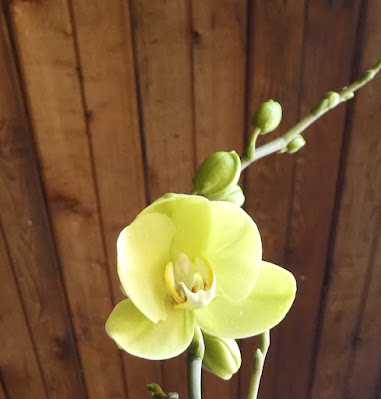
We celebrated this 59th Valentine's Day of our marriage in fine style--he brought me an orchid; I made him this card. He went out late in the afternoon to bring home fried chicken. I made potato salad and some salty, caramelly, chocolaty blondies. (Recipe HERE) There was bubbly. And we didn't have to drive home afterwards. 

Life is good.


Tuesday, September 21, 2021

Memory: John and Vicki Go to Buy Some Pigs


For years we raised pigs—not breeding them but buying two young pigs in the spring, feeding them through the summer and fall, and butchering them when the weather turned freezing—usually around January. When we moved to Madison County in 1975, this was a common feature of the local economy. Most of our neighbors raised feeder pigs; many cured the hams and sold them, keeping the tenderloin, side meat, backbone, and making sausage from the shoulders and trimmings for home consumption. Feeding pigs was a good way to use up extra milk or buttermilk (and when you keep a milk cow, as was another common practice that we adopted, there’s lots of extra.) It was also a fine way to dispose of kitchen scraps.

Most farms back then had a little wooden building that looked like an outhouse (most farms also had an outhouse) but was a ‘meathouse’, a place to smoke or cure hams and bacon. Clifford, our local mentor memorably once said of Richard Nixon, “I wouldn’t trust that man in my meathouse with a muzzle.”

When we had just moved here, Clifford assumed we would need a milk cow, a pair of feeder pigs, and a team of mules, and he made sure that we got these necessary adjuncts to rural life. He taught us how to milk; his wife Louise taught me to make butter. He helped John learn how to plow with Pete and Molly, our red mules. And he showed John all about butchering pigs (the worst part is shooting the pigs but that’s quick and the rest is very messy but fascinating—all those guts fit in there so neatly and there’s no way you could ever put them back.)

As the years went, Clifford and Louise moved away but pig butchering remained a social event of the winter season—usually Super Bowl weekend. On Saturday, John and a couple of his friends would do in the pigs, scrape off all the bristles, and cut the carcasses into quarters, leaving the meat in the barn to cool overnight. 

Saturday always involved major amounts of wood fire, boiling water, and Wild Turkey or Famous Grouse. All I had to do was cook a really good lunch for the guys and maybe cut up the liver and kidneys to freeze for catfood. And render the lard. If I’d followed the mountain tradition, I’d have made liver mush and cooked the brains and boiled the heads for souse. But John assured me he really didn’t want any part of that tradition.

The next day, usually Super Bowl Sunday, involved reducing the quarter sections into slices, ribs, backbone, and sausage, then wrapping and labelling same for the freezer. The guys would set up our big maple dining table so they could watch the pregame stuff while they dissected the joints, and I would be in the kitchen, grinding meat for sausage and wrapping pork parts.

All the while out boys were growing up, we did this—the milk cow and the pigs. But once the boys were off to school, keeping a cow and raising pigs didn’t make economic sense. So, we stepped back from the traditional way of life—as had many of our neighbors.

But that’s not what this story is about. This story is about the very last time we bought pigs.

All the old farmers we used to buy pigs from had died or quit keeping breeding sows, and there were no young pigs to be had in our area. Finally, we saw an ad in the Asheville newspaper for feeder pigs, called the number, and got directions to a place on the other side of Asheville. Off we went in John’s pickup with a big metal dog crate in the back to put the piglets in.

The directions led us to a semi-rural area with nice tidy home, occupied, it seemed, mainly by Black families, but we couldn’t find the exact place we needed. At last a man we asked directed us to a nearby clump of woods where a derelict house trailer sat.

We got out and warily approached the trailer. It was surrounded by rusting washing machines, ruined upholstered furniture, and other assorted junk. It really didn’t look as if anyone could live there but as we stood, waiting for inspiration, the sagging trailer door swung open and the fattest man I’d ever seen leaned out. He was unshaven and his grimy white undershirt failed miserably to reach his greasy trousers, leaving a great bulge of pale belly flesh lolling free.

“What you want?” He eyed us suspiciously and we explained that we were looking to buy some pigs.

“They ain’t my pigs—they belong to a colored feller lives over there—up the road a ways. He’s at work now. You uns just go on back there and get you two then come back and pay me. I can’t get around so good so I can’t take you up there but you just follow that road there through the trees and you’ll find ‘em.”

The road through the trees was a pair of deep ruts—so deep that it was impossible to get out of them, impossible to avoid running over the rumpled carcass of a dead speckled rooster that lay in one track. Amongst the trees were several rusted-out school buses, more old appliances, some puzzling blue plastic stuff, and other things, possibly nuclear waste, that we really didn’t want to investigate.

At the end of the rut road was a series of pens, some with flimsy tarpaper roofs, and mostly constructed of old pallets that were held together with rusty wire. The little pigs—about sixteen of them—were in the leftmost pen and we peered into the gloom to see a scrum of black piglets, milling about in at least an inch of pig shit. (Pig shit, if you didn’t know, is about the most obnoxious and long-lasting smell there is. Cow manure is pleasant in comparison.)

But the piglets looked healthy, so John (my her0) crawled in through the low door to attempt to catch a pig, trying to ignore the slippery, stinking floor and to concentrate on the two largest pigs, about thirty pounders. He made a desperate grab and snagged a candidate by the hind legs, the accepted method for dealing with small pigs. Young pig squealed bloody murder and in the next pen, The Mother Pig from Hell reared up her six-hundred-pound bulk, put her front trotters on the flimsy boards separating her from John, and glared at him over the partition. She was solid black, red-eyed, and frothing (literally) at the mouth. Which mouth, by the way, displayed wicked yellow two-inch ‘tushes’ (tusks) on either side.

Mama didn’t like what John was doing with her baby and the pen shook with her disapproval. John, thinking quickly, opened the pen door and thrust the little pig out at me—but I had jumped up in the back of the truck at the first sight of Mama.

“Take the goddam pig!” he hollered. I did and he dived back in with the piglets, grabbed a random second pig, and was back in the truck in about thirty seconds, keeping a keen eye on the swaying and totally inadequate wall between himself and the Black Sow of Doom.

Piglets secured in the crate, we backed back down the ruts, over the rooster and past the appliance graveyard, paid the very fat fella, and headed home.

“Well,” I said, wiping the pig shit off my hands onto my jeans, “that’s as much fun as I’ve had in quite a while.”

“I’m just glad,” said John, “that your mother can’t see us now.”

On the way home we stopped at a little country store to get some cold drinks. John said I should go in as I had less shit on me, which was true.

 As I paid for our cans of Coke, I became aware that all the grubby, tobacco-spitting old men lounging around the place were looking at me real strange and sniffing meaningfully in my direction.

I grinned as I climbed back into the truck. It had been a day to remember.


Sunday, September 29, 2019

A Family Heirloom . . . and a Memory


Josie loves her Peter Rabbit quilt. I pulled it out of the linen closet where it's been waiting since her daddy outgrew it.


Full disclosure: the above is not my quilt or picture. I found it on Etsy when I wondered it there were more like mine. There are. It was, no doubt, a kit.


As quilts go, it's not exactly my cup of tea. But I love it for its story -- my great-aunt Tellie and Marion, her life-long companion made it for Josie's uncle--Ethan, my older son.


I have a vivid memory of the two sitting side by side in the sun room at my grandparents' house, cross-stitching away on either end. They made many projects together and were frequent ribbon winners at their county fair.

I wrote more fully about Tellie and Marion HERE. I'm so glad Josie is loving their quilt. And that their love is warming another generation.

Monday, November 6, 2017

When I Rode a Horse Everywhere


When I was young, I was deeply enamored with the Wild West. This was the early Fifties and there were Western radio programs  -- the Lone Ranger was my favorite -- and Western movies and eventually (we didn't have a television till later,) a plethora of western TV series. What's more, the magazine Arizona Highways, showed up regularly at my grandparents house, full of gorgeous pictures of deserts, Indians, canyons and cacti. 

And when I went with my parents or grandparents for the usual Sunday afternoon drive, in my mind I was riding a horse. The fact that there was a kind of swag to hold on to across the back of the bench front seat gave me reins to hold as I guided my imaginary steed through sagebrush and hidden canyons

I can't name the the inciting incident -- but a serious contributor to my infatuation was a particular shelf of books in the Tampa downtown library -- the Westerns, especially those by Zane Grey.

My parents made the trip to the library once every few weeks and I trailed along. Oddly, I have no memory of a children's section -- just the Zane Grey books.  The Rainbow Trail especially has lingered in my memory for over sixty years now -- hazy, indefinite . . . something about Mormons and a ,mysterious frisson at the puzzling village of 'sealed wives' --  the unlawful extra wives kept hidden away -- and the equally puzzling 'night visits' paid by their husbands.


Since I seem to be in a re-reading sort of a mood, I found a paperback copy of The Rainbow Trail and jumped in, only to realize that it was a sequel to the famous Riders of the Purple Sage -- which I didn't remember reading -- it was only sixty-some years ago . . .

But on reading Riders, I realized I must have read it back then -- there are bits and pieces of it that seem very familiar and, I swear, have made their way into my subconscious and, in a few cases, into my writing.

The description is sublime -- maybe too much for modern tastes but not for me. The tone -- high, self-sacrificing morality and nobility against utter villainy -- is certainly not to modern tastes -- even I was a tad appalled when the hero flees rather than shoot a man who he believes has come to do the heroine harm. 

But Grey was writing in the early 1900's and this is pretty standard. I have a high tolerance for melodrama, having devoured my grandmother's books from that era. 

The hidden valley described in Riders has evidently lurked in the back of my mind all these years. The description seemed utterly familiar when I read it.

" Above Venters loomed a wonderful arch of stone bridging the canyon rims, and through the enormous round portal gleamed and glistened a beautiful valley shining under sunset gold reflected by surrounding cliffs. . . The valley was a cove a mile long, half that wide, and its enclosing walls were smooth and stained, and curved inward, forming great caves. . . . No purple sage colored this valley floor. Instead there were the whites of aspens, streaks of branch and slender trunk glistening from the green of leaves, and the darker green of oaks, and through the middle of this forest, from wall to wall, ran a line of brilliant green which marked the course of cottonwoods and willows."

Trained as a dentist, Zane Grey wrote in his spare time until his books became best sellers and his life became a bit like his books. I found the article in Wikipedia HERE fascinating. (He was not quite as 'moral' as his heroes.)